A complete guide to choose LED track lighting
By Amy Topsun lighting
No More Confusion in Choosing Track Lights! From creating a warm home ambiance to achieving precise commercial lighting, simply master four core parameters—brightness, color temperature, color rendering index, and beam angle—to easily craft your ideal lighting effects.
When you are decorating your home or store, you plan to install LED track lights. But you really have to choose, there are so many styles and parameters, such as wattage, color temperature, CRI, and beam angle, etc. It sounds complicated. Don’t worry, this article is to help you understand the choice of track lights. Follow step by step, and you can choose the LED track lighting that suits you best!
What is an LED track light?
Simply put, an LED track light is a track lamp installed on a long track rail. There are wires in this track rail, and the base of the track lamp can be buckled into the track rail, and it can be moved back and forth on the track, and the direction and angle can be adjusted at will.
Why does everyone like to use track lights? What are its advantages?
Flexible and free: You can shine wherever you want, and the position and angle can be changed at any time.Great light and shadow effect: It is especially suitable for key lighting, which can make the places you want to highlight (such as paintings, ornaments, and goods) bright and layered.Easy to install (relatively): Once the track rail is installed, it is easy to add or subtract track lights and adjust the position.
Good-looking: Many track lights are designed to be modern and simple, which can add points to the space.
Wide range of applications: Home (living room, dining room, study, entrance), store (clothing store, supermarket, exhibition hall, cafe), office, museum, etc., it can be used indoors almost anywhere.
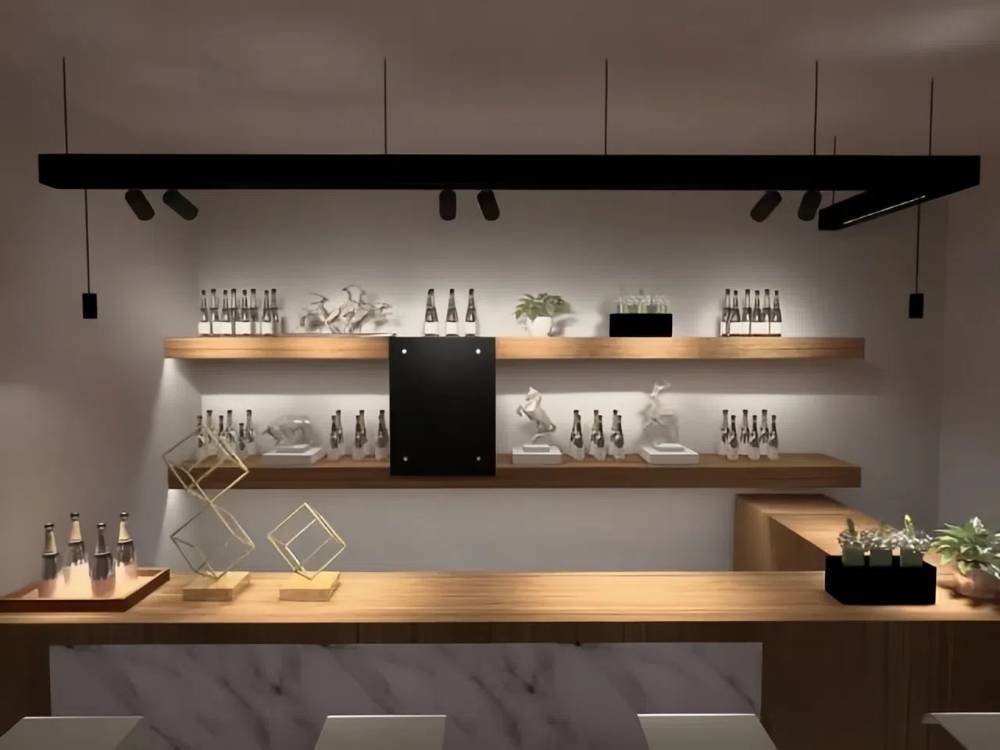
5 elements you should consider when purchasing track lights
1. Your usage scenario and purpose
Determine the purpose first: home decoration or commercial use? Which position to illuminate? What kind of effect do you want?When buying any lamp, the first step is to think clearly about where you want to use it and what effect you want to achieve. This determines your requirements for various parameters of the lamp.- Residential track lights: Track lights are usually used at home for key lighting, such as illuminating the decorative paintings on the TV background wall, the sideboards in the restaurant, the bookshelves in the study, and the artworks in the entrance. At this time, the beam angle of the light should not be too large, and the brightness should be moderate. The focus is more on creating a warm or stylish atmosphere.- Commercial track lights: More commonly used in shops, restaurants, and exhibition halls. Clothing stores need to make the colors of clothes bright and realistic; supermarkets may need to make fresh food fresher and more attractive; exhibition halls need to accurately illuminate exhibits. Commercial track lights have higher requirements for lighting, especially color rendering index (CRI) and brightness.If you want to illuminate specific objects, such as a painting, you need a narrow beam angle, moderate brightness, and high CRI.If you want to illuminate an entire wall, you may need a wide beam angle and add a few more track lights.If you want to illuminate a dining table, you may need a warm color temperature, and the angle should cover the tabletop.After clarifying the purpose of lighting, the next parameter selection will have a direction.2. Light efficiency parameters (brightness, color temperature, color rendering index, beam angle)This is the most critical part of selecting track lights.
Brightness
In the past, we used to look at the wattage (W) when buying lamps, thinking that the higher the wattage, the brighter it is. But in the LED era, the light efficiency is higher, and wattage is no longer the only standard for measuring brightness. It is more scientific to look at “lumens” (lm). Lumen represents the total luminous flux emitted by the light source, which can be simply understood as “light quantity”.
Wattage (W): Represents the power consumption of the lamp. The higher the wattage, the higher the brightness, but it is not absolute.
Lumen (lm): Represents the actual brightness output of the lamp. Under the same wattage, the higher the lumen value, the higher the light efficiency of the lamp and the more energy-saving it is.
So, choose it according to the range of illumination and the brightness you want to achieve. Track lights are usually used for accent lighting, and do not need to illuminate the entire space like the main light. For example:- To illuminate small decorative paintings/ornaments, track lights with 10W are usually enough.
- To illuminate large artworks/goods: You may need a 15W-30W or even higher lamp head, depending on the area and brightness requirements.
- Basic lighting for corridors/background walls: Use some track lights with low wattage and wider beam angles.
My experience is that for track lights used as key lighting at home, it is more common to choose a single track light power between 7W and 15W. If it is commercial, like a clothing store, you may use 20W, 30W, or even higher to ensure that the goods are eye-catching enough.Color temperature
Color temperature is measured in Kelvin (K), which determines whether the color of the light is yellowish, white, or blue.
2700K-3000K: Warm white light, with a yellowish color, is very warm and comfortable, suitable for bedrooms, living rooms, restaurants, and other places that require a warm atmosphere, or commercial spaces that want to create a retro and soft feeling (such as cafes).
4000K: Natural white light, neutral color, feels very natural and comfortable, suitable for study rooms, offices, kitchens, modern minimalist style homes, and most commercial spaces that require more natural colors.
5000K-6500K: Cold white light/pure white light, bluish-white color, feels brighter and more energetic, suitable for areas that require high brightness, or spaces that like a bright and refreshing feeling.So, choose the color temperature according to the space atmosphere you want and the characteristics of the illuminated object.
- Warm white light (3000K) is recommended for most areas of the home, especially the living room and bedroom.
- Natural white (4000K) can be used in the study and kitchen.
- Commercial space depends on the attributes of the goods. Many clothing stores like to use 4000K or slightly higher natural white, which can better restore the color of clothes.
- The fresh food area may use warm or specific spectrum lights(like bread chip, vegetable chip, meat chip, etc) to make the food look more delicious.Color rendering index(CRI)
This is an indicator to measure the ability of the light source to restore the real color of the object, expressed as Ra, with a full score of 100. The higher the Ra value, the closer the color of the object under this light source is to its true color under natural light.
Why is it important? If the color rendering index of the light is low, you will see color differences and color distortions. For example, a piece of clothing is originally red, and a low color rendering index light may turn it into orange or dark red.
Ra > 80: This is the requirement for ordinary lighting, which is fine for daily use.
Ra > 90: High color rendering index can better restore colors, which is highly recommended!
Especially if you want to illuminate artworks, photos, or commercial spaces (clothing stores, art galleries, boutiques, etc.) at home, you must choose Ra>90. You will find that the same product looks different under the light of Ra>90, more vivid and more real!
So, choose track lights with Ra>90, especially in areas where you need to display items such as living rooms and dining rooms.Beam angle
The beam angle determines whether the light is concentrated (spotlighting) or dispersed (floodlighting).
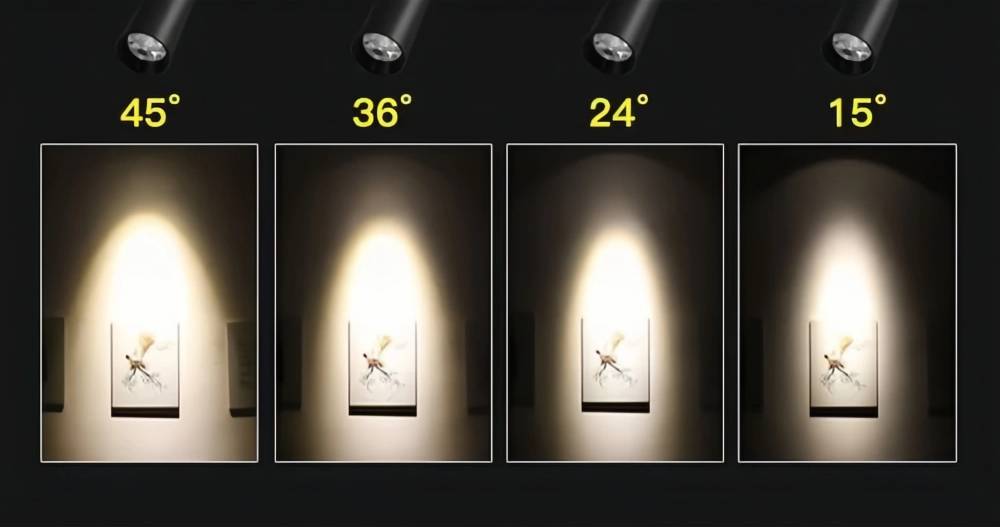
- Narrow beam angle (10°-30°): The light is concentrated to form a relatively small spot, which is suitable for highlighting key points, such as illuminating paintings on the wall, ornaments on the table, single models or exhibits in the store.- Medium beam angle (30°-45°): Between spot and flood, the spot is larger than the narrow beam angle, and can illuminate a slightly larger range, such as above the dining table and the bar area.
- Wide beam angle (>45°-60° or even wider): The light is more dispersed, forming a large area of spotlight or uniform illumination, which can be used for local basic lighting, or to illuminate the entire wall (wall washing effect).So, choose the beam angle depending on the size and distance of the object you want to illuminate. Use a narrow beam angle for small objects and close distances; use a wide beam angle for large objects, long distances, or if you want to cover an area. Lamp heads with different beam angles can be matched on the same track to achieve richer lighting effects.3. Quality of LED track lighting and track railsWhen choosing the track light fixtures, you can’t just look at the appearance and parameters; the internal quality is also very important.
- Heat dissipation: LED lamps generate heat when working, and good heat dissipation can extend the life of the lamp beads. If the lamp shell is made of metal (especially aluminum), the heat dissipation is usually better. Touch the material and weight of the lamp, and the good lamps are made of more solid materials.
- Driver: It is the heart of the LED lamp, responsible for converting voltage and stabilizing current. If the driver is not good, it is easy to have flicker (you can see it when looking at the screen of a camera or mobile phone), noise, and even affect the life of the lamp. Try to choose lamps with brand drivers.
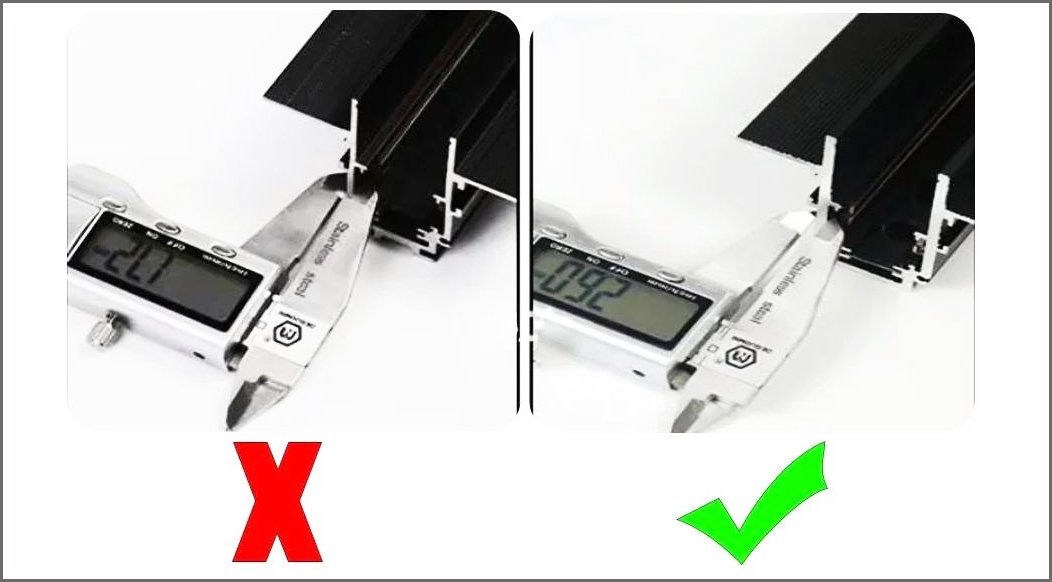
- The quality of track rail is also very important. It is recommended that the track rail thickness be more than 2 mm; if it is too thin, it will easily deform during installation or transportation, making it difficult to move the track lamp and causing poor contact.
4. Appearance design and material: the style should match!
There are many styles of track lights, including cylindrical, square, flat, etc. The colors are also diverse (black, white, and gray are classic colors). When choosing, you should consider the overall decoration style and the color of the track itself to achieve coordination and unity.
In terms of material, metal materials (especially aluminum) not only have good heat dissipation, but also have a more advanced texture.5. Budget: Still remember, you will get what you pay for.
The price of track lights ranges greatly. The price difference is mainly reflected in the brand, chip (such as Philips, Cree), driver, shell material, color rendering index, etc.
- If your budget is limited, at least ensure that the core parameters (such as Ra>85, suitable color temperature, sufficient brightness) meet the standards, and choose products with good heat dissipation and stable drivers.- If the budget is sufficient, it is strongly recommended to pursue high CRI (Ra>95) and choose the high-quality LED track lights with Brands, as the quality and after-sales are more guaranteed.
So, don’t just focus on low prices. Some super cheap track lights may have false wattage, low CRI, poor heat dissipation, and poor driver quality. They will have serious light decay or even break down in a short time, which is not worth the loss.
Guide to choosing the LED track lighting - 7 steps
To summarize the above content, your track light purchase list can be listed like this:1. Determine the use scenario and lighting purpose: Is it for home or commercial use? Is it for painting, merchandise, or local basic lighting? What atmosphere do you want?
2. Preliminary planning: How many meters of track rails do you need to install? How many LED track lights are needed? How far is the distance between the LED track lights?
3. Choose the LED track lighting parameters: - Brightness: How bright does it need to be? What is the corresponding approximate lumen? (Combined with the wattage) - Color temperature: Do you want warm light (3000K), natural light (4000K), or cold light (5000K+)? - Color rendering index (CRI): If the budget is sufficient, choose Ra>90, at least Ra>80. - Beam angle: Do you need a spotlight (narrow beam) or a floodlight (wide beam)? Or mix and match?
4. Choose appearance and material: Choose a design and color that matches the style of the space, and give priority to high-quality aluminum (which is conducive to heat dissipation).
5. Check quality details: Understand the information of lamp beads and drivers, and check product reviews and warranties.
6. Determine the budget: On the basis of meeting needs and quality, choose products with high cost performance.
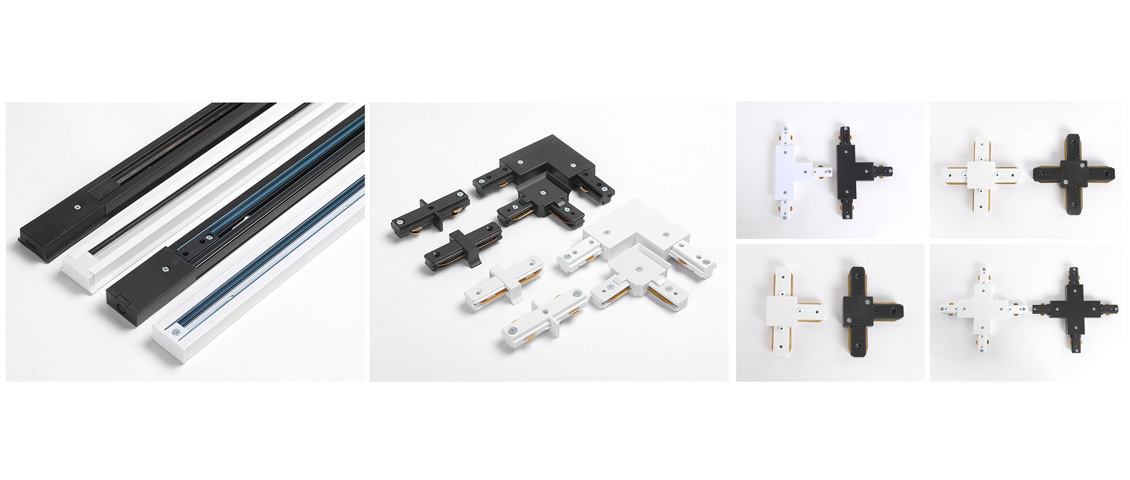
7. Check accessories: Don’t forget whether the track rail’s joints, elbows, power access heads, covers, and other small track accessories are complete and suitable.
Frequently Asked Questions about LED Track Lighting
Q1: Do track lights cost electricity?A1: The mainstream track lights are LED now, and the characteristics of LED lights are high efficiency and energy saving. At the same brightness, it saves much more electricity than traditional halogen lamps and energy-saving lamps. So if you choose LED track lights, you don’t have to worry too much about electricity bills, which is much less troublesome than traditional lamps.Q2: Will the installation of track lights at home make it look too empty and without the feeling of main lights?
A2: No, LED track lights are mainly used for key lighting and local atmosphere lighting. They are complementary to main lights (ceiling lights, chandeliers), not one replacing the other. Many families like the design without main lights, and use downlights, spotlights, and light strips with track lights to create a multi-level lighting effect, which will make the space look more advanced and more designed. The key is to reasonably plan the number of lamp positions and lamp heads, beam angle, and match with other types of lamps.
Maybe you would like to read LED lamps for the living room ideasQ3: Can track lights be made with dimmable?
A3: Yes! But the lamp itself needs to support a dimming function, and it needs to be matched with compatible dimming drivers and dimmers (switches). If you have dimming needs, you must ask clearly when purchasing, and purchase dimmable track lights, drivers, and dimming switches that support dimming.
Top Sun Lighting provides dimmable LED track lights: Triac dimmable, 1-10V dimmable, Dali dimmable.
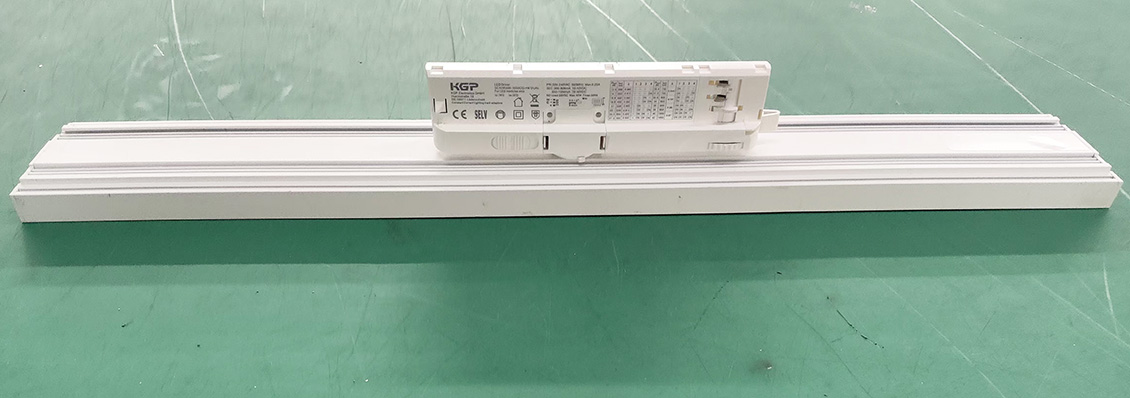 Q4: Will track lights heat up after long-term use? Is it safe?
A4: LED lights generate heat when they work, which is a normal physical phenomenon. High-quality track lights usually use aluminum and other materials with good heat dissipation as the shell, which can effectively dissipate heat and ensure the stable operation and life of the lamp beads. If the lamp feels very hot to the touch or has a peculiar smell, there may be a quality problem, and it needs to be stopped and checked.Q5: Is the installation of track lights complicated?
A5: Relatively speaking, the installation of track lights requires one more step than ordinary ceiling lights(installing the track rail). The track rail needs to be fixed to the ceiling or wall, or suspended by wire rope if the ceiling is very high, and the power cord is connected from the reserved power point. Then the lamp head is clipped into the track. The whole process is not particularly complicated, but it involves wire connections and high-altitude work. If you don’t have relevant experience and tools, or are not familiar with circuits, it is recommended to ask a professional electrician to install it to ensure safety and reliability.
Maybe you would like to read the steps to install the LED track lights and plan wiresRegarding the things about track light selection, I hope this article can help you choose the right track lights. Remember, choosing LED track lights is like putting makeup on a space. The right track light can instantly enhance the appearance and atmosphere of the space.
Spend more time understanding these parameters and choose according to your actual needs. You will definitely find a track light that satisfies you!
If there is anything unclear, please feel free to contact us. And also, welcome to choose high-quality LED track lights from Top Sun Lighting.
How to choose the right magnetic track light?
Previous
Outdoor LED Spotlights: A Comprehensive Guide for Wholesale Buyers
Read More
Next
How to choose the best LED ceiling lamp for living room ?
Read More