The difference between LED downlight and LED spotlight - How to choose ?
By Amy Topsun lighting
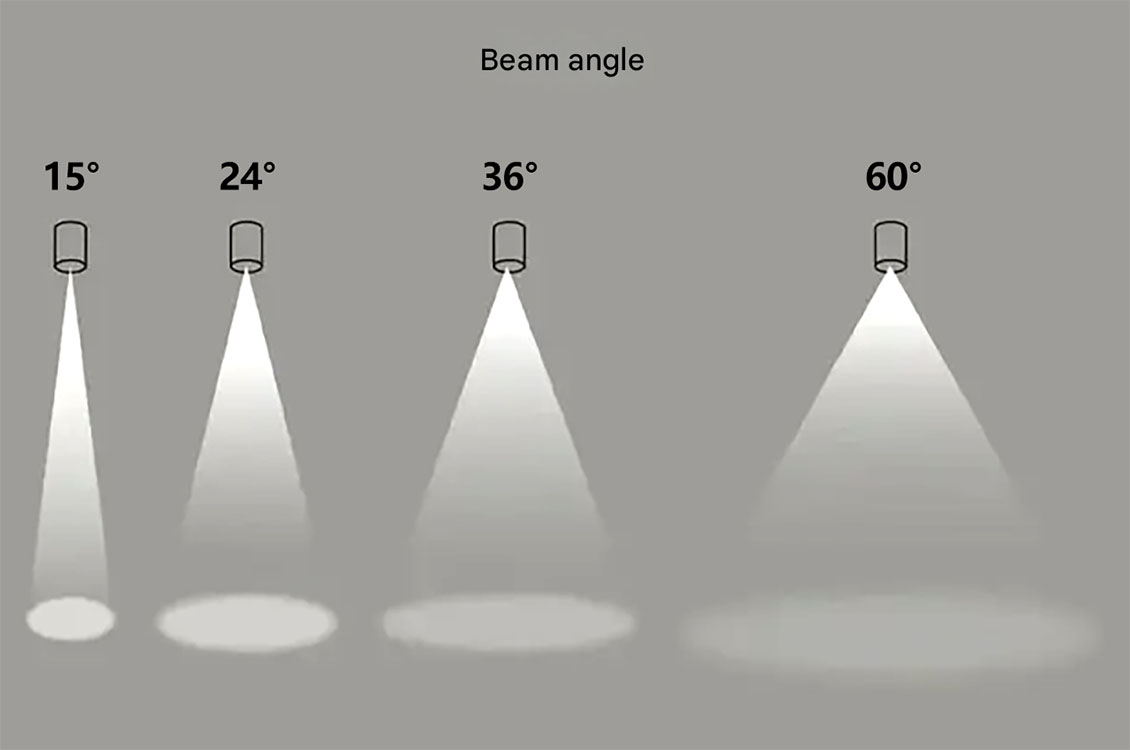
LED downlights emit scattered light, offering a wide range of illumination, and typically have an angle of 60°-120 °, suitable for spaces that require uniform light. The LED Spotlight is focused, with a slight irradiation angle (usually 10°-45°), making it ideal for spaces that require highlighting key points.
What is an LED downlight?
LED Downlight, also known as an embedded downlight, is a lighting fixture that is installed directly into the ceiling. It is typically made with SMD downlight and COB downlight, and the light is emitted through a tubular reflector and diffuser to achieve a uniform lighting effect. Downlights are characterised by their soft and non-glaring light, making them suitable for various indoor environments, especially places that require uniform lighting over large areas.
What is an LED spotlight?
An LED spotlight is a focusing lamp that emits an intense and concentrated beam of light, typically made of a COB (Chip-on-Board) type. Spotlights are usually installed on ceilings, walls, or track rails. And their angle and direction of illumination can be adjusted freely. Spotlights are characterised by concentrated light and high brightness, and are often used for key lighting and decorative lighting, such as display cabinets, artwork lighting, and local environment settings.
The difference between downlights and spotlights
1. Lighting method
• Downlight: This lighting is scattered light, with a wide range of illumination, and the angle is usually 60°-120°, providing uniform and soft lighting that is suitable for overall lighting. The light distribution of downlights is uniform, without obvious light spots, making them ideal for creating a comfortable environment.• Spotlight: This lighting is focused, with a slight irradiation angle (usually 15°-45°), and this concentration can highlight specific areas or objects, making it suitable for key lighting or decorative lighting. The light of the spotlight has obvious light spots and precise edges.
2. Installation method
• Downlight: Usually embedded in the ceiling, always called a recessed LED downlight, the lamp body is hidden, the surface is flat, and it is suitable for simple style decoration. The installation depth of the Downlight is shallow, which is suitable for most suspended ceilings.• Spotlight: It can be embedded in the ceiling, or surface mounted, suspended, or hanged in the track-rail, etc, with greater flexibility.
3. Light source adjustment
• Downlight: The light source is fixed, and the irradiation direction cannot be adjusted.• Spotlight: The light source and irradiation direction can be adjusted freely, which is more flexible and changeable. (Adjustable angle LED spot lights)
4. Application scenarios
• Downlight: Suitable for spaces that require uniform light, such as living rooms, bedrooms, kitchens, corridors, etc., suitable for basic lighting or auxiliary lighting. Downlights can make the entire space bright and comfortable, while also reducing shadows.• Spotlights: Suitable for spaces that need to highlight key points, such as TV background walls, decorative paintings, display cabinets, or commercial display areas. Spotlights are often used to create an atmosphere or guide sightlines.
5. Appearance and style
• Downlights: Simple design, embedded installation makes the ceiling look neat, suitable for modern simplicity, Nordic or minimalist style.• Spotlights: Diverse appearance, adjustable angle, or exposed design is more decorative, suitable for modern, industrial style, or artistic decoration style.
Recommendations for choosing downlights and spotlights
1. Choose according to the space function
Living room: The living room needs a combination of basic lighting and atmosphere lighting. It is recommended to use downlights as the main lighting (such as 7W-10W, evenly distributed) to provide overall light; local areas (such as decorative paintings or TV walls) can be matched with spotlights to highlight the decorative effect.Bedroom: The bedroom is mainly warm and comfortable. It is recommended to choose 3W-7W warm light downlights to create a soft atmosphere. If there are decorative paintings or bedside areas that require illumination, 1 or 2 pieces of spotlights can be installed.Kitchen: The kitchen needs bright and even light. It is recommended to use 10W-12W pure white downlights to ensure the operating area is well-lit. Spotlights can be used for decorative lighting inside the cabinet or in the bar area.Corridor/Hallway: The corridor has a lower light demand. 3W-5W downlights can be used for even light distribution. If there are decorations in the hallway, spotlights can be used to highlight the key points.Commercial space: In exhibition halls or shops, spotlights are more suitable for highlighting goods, and downlights can be used as auxiliary lighting.
2. Choose according to the decoration style
- Modern simplicity/Nordic style: Downlights are preferred. Recessed downlights with white or black frames can keep the ceiling simple, and match warm white light or pure white light to create a fresh atmosphere.- Chinese/Classical style: Downlights and spotlights can be combined. Downlights provide overall lighting, while spotlights are used to highlight the texture of wooden furniture or decorative elements.- Industrial style/Modern art style: Spotlights are more suitable, especially track spotlights or spotlights with adjustable angles, which can enhance the layering and artistic sense of the space.
3. Consider budget and maintenance
- Limited budget: Choose an LED downlights manufacturer which are cost-effective, easy to install, and has low maintenance costs. 5W-20W downlights can meet the needs of most families.- Pursuit of personalisation: You can choose adjustable-angle spotlights or track spotlights to increase the sense of design, but you need to pay attention to the installation and maintenance costs.- Long-term use: Give priority to brand spot downlight LED wholesale, which have a long life (30,000-50,000 hours), slow light decay, and reduce the frequency of replacement.
4. Comprehensive lighting design
• Layered lighting: Adopt a layered design of "basic lighting + key lighting + decorative lighting". Downlights are responsible for basic lighting, recessed LED spot lights are responsible for key lighting, and chandeliers or wall lamps are responsible for decorative lighting.• Color temperature matching: In the same space, the color temperature of downlights and spot lights should be consistent (such as using warm white or natural white) to avoid cluttered light.• Intelligent control: Choose downlights and spotlights with dimming or intelligent control(like Tuya, Wifi, Bluetooth), and you can adjust the brightness and color temperature through a mobile phone or remote control to enjoy the convenience of technology.
FAQ about spotlights and downlights
Q1: Can downlights and spotlights be mixed?A1: They can be mixed, but the color temperature and style must be coordinated. For example, downlights are used in the living room to provide overall lighting, and spotlights are used to highlight the decorative wall, which is more effective.Q2: How to avoid glare from downlights or spotlights?A2: Choose downlights with anti-glare design (such as deep cup design) or spotlights, and control the angle of light to avoid direct exposure to the human eye.Q3: What is the installation distance between downlights and spotlights?A3: The distance between downlights is generally 1-2 meters, and the spotlights are adjusted according to the objects or areas to be illuminated, and the key lighting areas can be appropriately dense.
Conslusion
There are significant differences between downlights and spotlights in terms of lighting methods, installation techniques, angle adjustment capabilities, and application scenarios. When making specific choices, it is necessary to comprehensively consider multiple aspects such as usage requirements, space design style, lighting effects, energy consumption, environmental protection, installation and maintenance, and cost budget. By carefully choosing downlights and spotlights, a perfect combination of functionality and decoration can be achieved, creating a warm, comfortable, and visually appealing living environment.
Previous
Dimmable LED lighting system:0-10V Vs. 1-10V Dimming
Read More
Next
How to choose the right wattage of recessed downlights?
Read More