Why is Anti-glare LED downlights very important?
By Amy Topsun lighting
The anti-glare LED downlights adopt a special design, which can reduce glare while lighting, making the field of vision clearer and avoiding visual fatigue caused by glare.
Understanding the knowledge of Glare
1. What is Glare?
Glare refers to a condition that causes visual discomfort and reduces the visibility of objects due to inappropriate brightness distribution or extreme brightness contrast in space or time. The light sensation in the field of vision that the human eye cannot adapt to may cause disgust, discomfort, or even loss of vision. There is too high brightness in a specific part of the field of vision or too significant brightness changes before and after. Glare is one of the essential causes of visual fatigue.
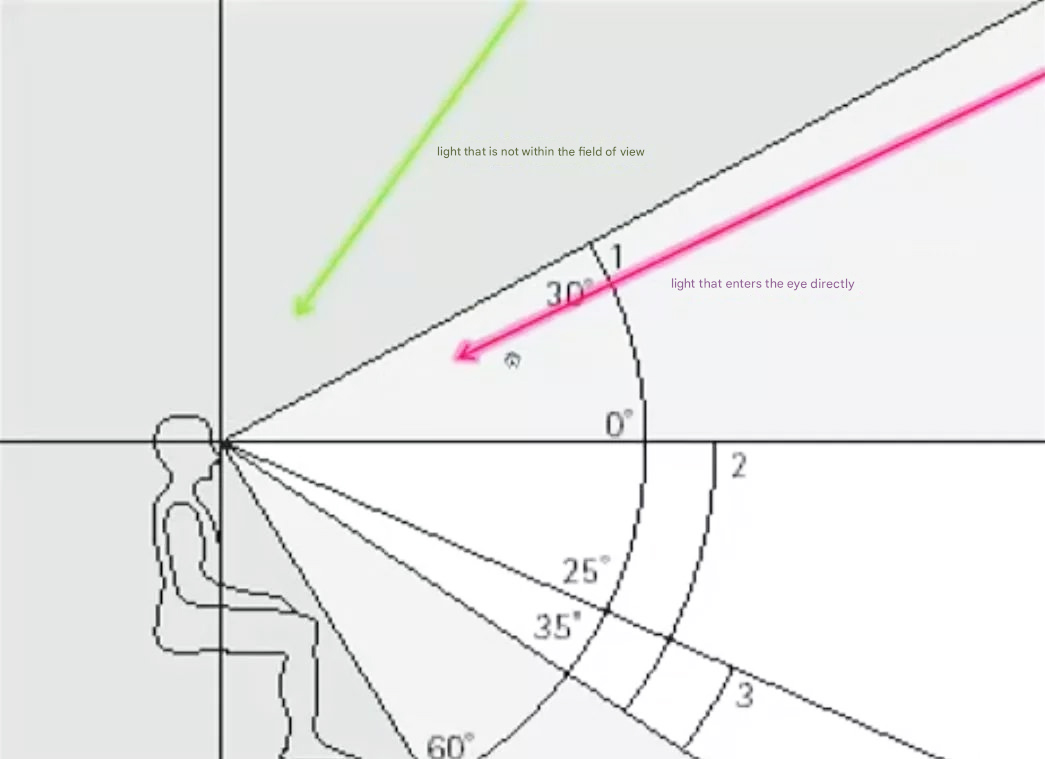
The normal eye vision range is 30° above and 60° below the horizon. If there is dazzling light within this range, it is glare.
2. Glare can be divided into direct glare and reflected glare
Direct glare is caused by the human eye contacting a high-brightness light source.Reflected glare is the irritating glare caused by the light source directly shining on a smooth surface and reflecting into the human eye.
3. What caused the glare?
The angle between the light source and the viewpoint mainly causes glare.A light source with extremely high brightness, which produces exceptionally high light or strong brightness contrast after reflection, will cause glare to the audience.The glare in the exhibition environment includes primary emission glare and secondary reflection glare.Glare causes visual discomfort, but intense glare can damage vision and even cause blindness. Therefore, it is essential to control glare in the display light environment.
4. The harm of glare
The consequences of glare can be divided into three types: discomfort glare, light adaptation glare, and energy-depleting glare.
a. Discomfort glare refers to the discomfort felt in specific too-bright environments, such as reading in strong sunlight or watching high-brightness TV in a dark room. When the human eye's field of vision must switch between environments with a significant difference in brightness, it will feel uncomfortable. This uncomfortable situation will cause an escape movement of the eye and reduce vision.b. Light adaptation glare refers to a phenomenon in which the vision of both eyes decreases when people walk from a dark movie theatre (or underground tunnel) into the sun. The main reason is that the strong glare source forms a central dark spot on the human eye's retina, causing long-term unclear vision.c. Energy-depleting glare refers to a phenomenon in which the contrast of the retinal imaging of the human eye decreases due to the surrounding messy glare sources. This makes it difficult for the brain to analyze the imaging, similar to the performance of a slide projector on the wall being disturbed by the intense light next to it, resulting in decreased imaging quality.
5. What is the Unified Glare Rating(UGR)?
Glare has an essential impact on the health of the light environment. Therefore, there are industry standards for judging the comfort of the light environment, one of which is the Unified Glare Rating.The Unified Glare Rating (UGR) is a psychological parameter that measures the subjective reaction of discomfort caused by the light emitted by the lighting device in the indoor visual environment to the human eye. If the UGR is greater than 19, the glare will easily attract attention and irritate the human eye, and if the UGR is less than 19, it is the level of glare that the human eye can accept.
| UGR Value |
Visual Evaluation |
UGR Range |
Application |
| 10 |
Absolutely no glare |
UGR《 12 |
Five-star hotels, luxury stores |
| 13 |
No obvious glare |
UGR《 16 |
Indoors, engineering drawing |
| 16 |
Glare, but not blinding |
UGR《 16 |
School classrooms, art classrooms |
| 19 |
Glare, but acceptable |
UGR《 19 |
Commercial stores, offices |
| 22 |
Glare, not severe |
UGR《 22 |
Supermarkets, convenience stores |
| 25 |
Glare, but blinding |
UGR《 25 |
Some convenience stores, heavy industry |
| 28 |
Relatively severe glare |
UGR《 28 |
Railway station platforms, halls |
| 30 |
Unbearable glare |
UGR 》30 |
Nude light sources, car high beams, and lighting that direct exposure to human eyes |
8 methods designed for Anti-glare LED downlights
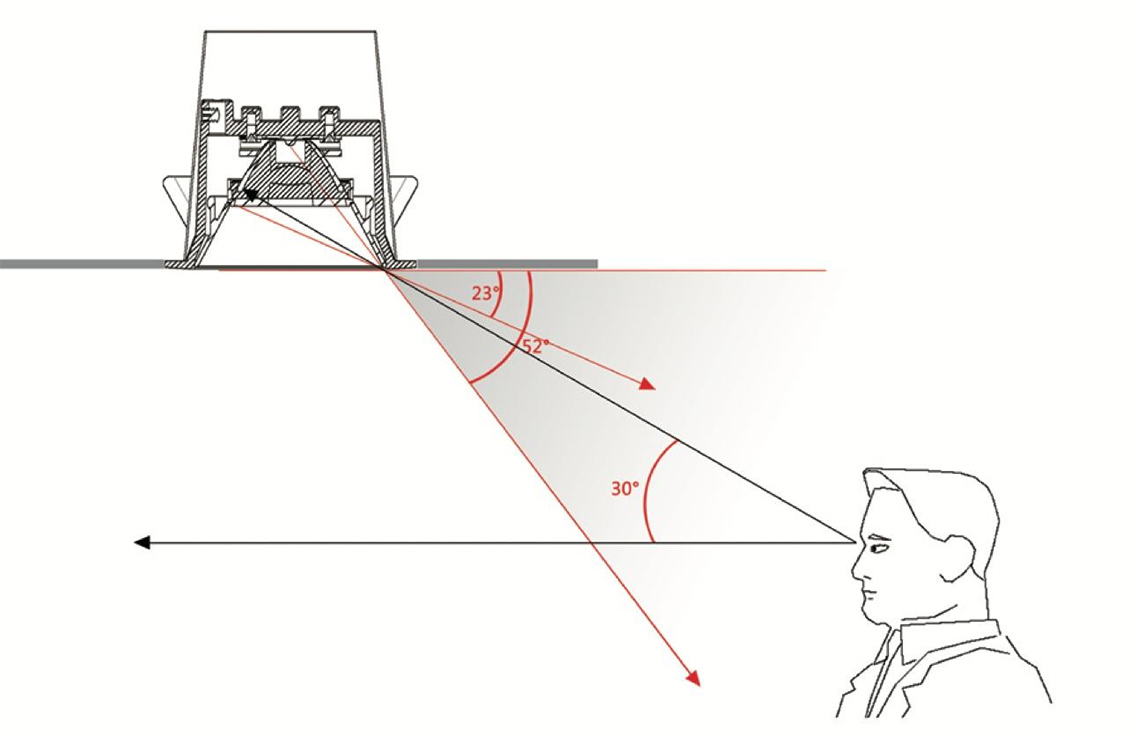
1. Shading angle > 30 degrees
The conventional shading angle of lamps is based on the normal human visual angle of 30 degrees. Light can only be prevented from entering the human eye when the lamp's shading angle exceeds 30 degrees.
2. Increase the installation height of the lamp
Deep illumination lamps increase the installation height while keeping other structures unchanged, increasing the shading angle.
3. Cross anti-glare grille
The cross anti-glare grille mainly blocks light in both vertical and horizontal directions. The critical position of glare is adjusted from the boundary to the center of the lamp, thereby increasing the shading angle to achieve the purpose of anti-glare.
4. Honeycomb anti-glare
The honeycomb anti-glare grille can block light from all directions. It is the easiest to use among all anti-glare accessories but has the most significant light loss. If you want a high-illumination environment, you need to add more lamps.
5. Shading leaf anti-glare
Shading leaves can block light from all directions, making it easy to adjust the light. They are the most flexible anti-glare accessories. However, this accessory is large and is generally used with track lights, which is neither beautiful nor convenient.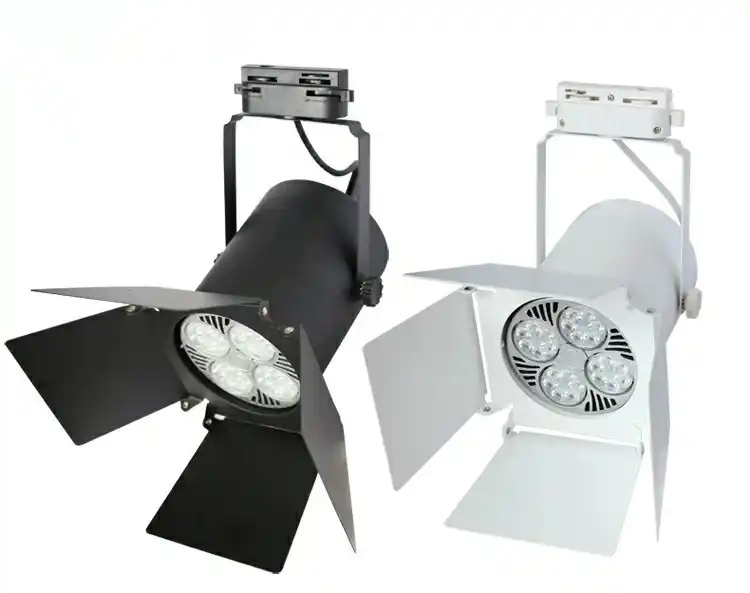
6. Deep hiding LED chip to prevent glare
Deep-hiding LED chips mean hiding the light source deeper, reducing its range, covering part of it, ensuring that people cannot directly see the light source within a particular visual range, and reducing direct glare.It is a standard anti-glare method on the market, but the lamp body's height is usually high, making it unsuitable for places with limited ceiling height.
7. Soft light glass or UGR< 19 diffuser
Soft frosted glass, or use UGR<19 diffusers to replace the common PC, etc., which can reduce the brightness of the light source surface to some extent and achieve an anti-glare effect to some extent.
8. Reflector cover color
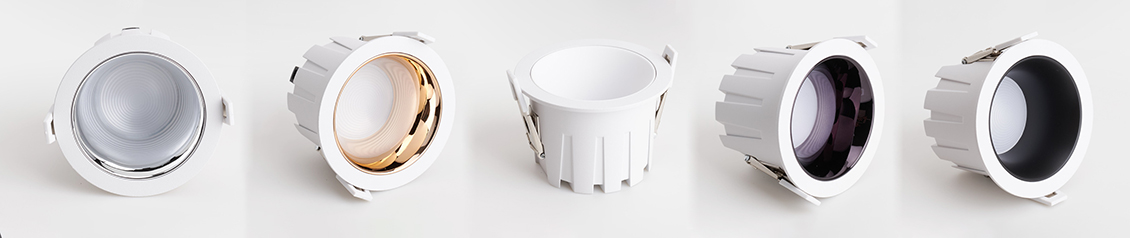
The color of the reflector significantly impacts the anti-glare effect. The black inner wall has the best anti-glare effect, followed by silver and white.It is generally not recommended to choose lamps with golden inner walls. Mirrors and glossy inner walls have a better anti-glare effect than frosted and matte inner walls.
Conclusion
It is very important to choose anti-glare LED downlights for our homes or offices for vision and health.When installing, we should also pay attention to the projection direction of the light and try to make it perpendicular to the general line of sight of the human eye. To reduce reflected glare in key lighting areas in the home, we should avoid using materials that easily reflect light.
Maybe you would like to read a complete guide for choosing LED downlight
Previous
Best LED ceiling lamp for home
Read More
Next
Adjustable lighting angle of LED downlight
Read More