How to choose the right LED ceiling lights for home?
By topsunlighting
When choosing LED ceiling lights for the home, we need to consider the design, size, power, and other technical specifications.
LED ceiling lights are a good choice for indoor lighting, widely favoured by families for their ease of installation, even illumination, and diverse designs. However, with a dazzling array of ceiling light brands and styles on the market, consumers often struggle to choose, and a slight misstep can lead to issues such as glare, insufficient brightness, or a mismatch with the decor. What factors should we consider when choosing a ceiling light? Today, we'll provide a detailed introduction.
Basic Function Selection
1. Appearance Selection
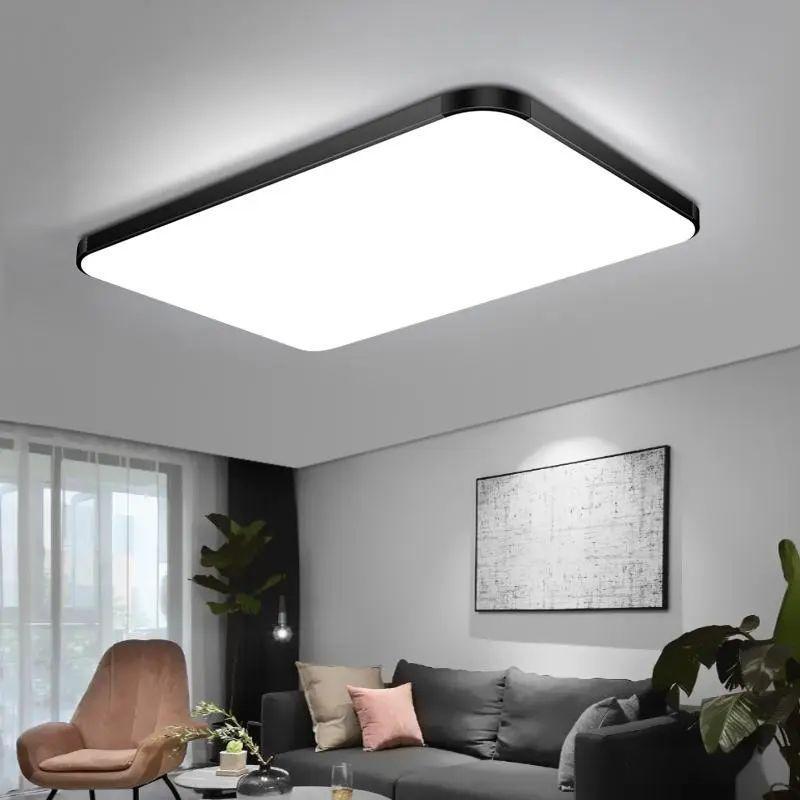
For large living rooms, square ceiling lights are recommended. Their clean lines and black frames add a touch of sophistication.
 For smaller spaces such as bedrooms and studies, round or irregularly shaped ceiling lights offer a simple, soft, and warm feel.
It's not recommended to buy irregularly shaped and linear ceiling lights. While they may look nice, they are often overpriced, go out of style quickly, and are easy to break. Simplicity is timeless.
For smaller spaces such as bedrooms and studies, round or irregularly shaped ceiling lights offer a simple, soft, and warm feel.
It's not recommended to buy irregularly shaped and linear ceiling lights. While they may look nice, they are often overpriced, go out of style quickly, and are easy to break. Simplicity is timeless.
2. Size Selection
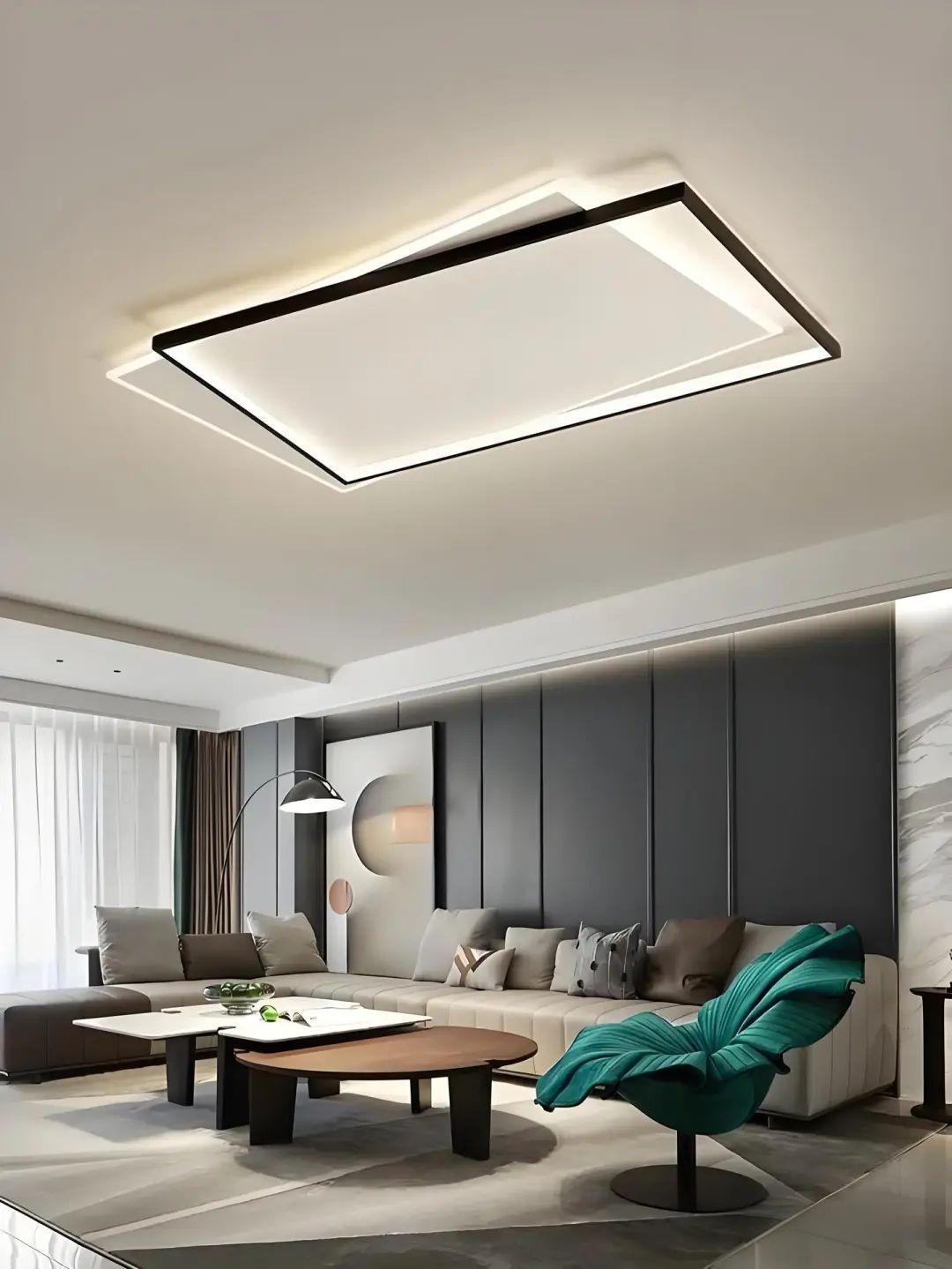
The room's area determines the size. Buy larger rather than smaller; a small one will look unattractive.For living room square ceiling lights, the narrowest side should be at least 60cm for areas over 20 square meters; 50cm is acceptable for areas under 20 square meters; and 70cm is recommended for areas over 30 square meters.The dimensions of the light fixture can be calculated using a 1:5 ratio of its length and width to the ceiling dimensions.
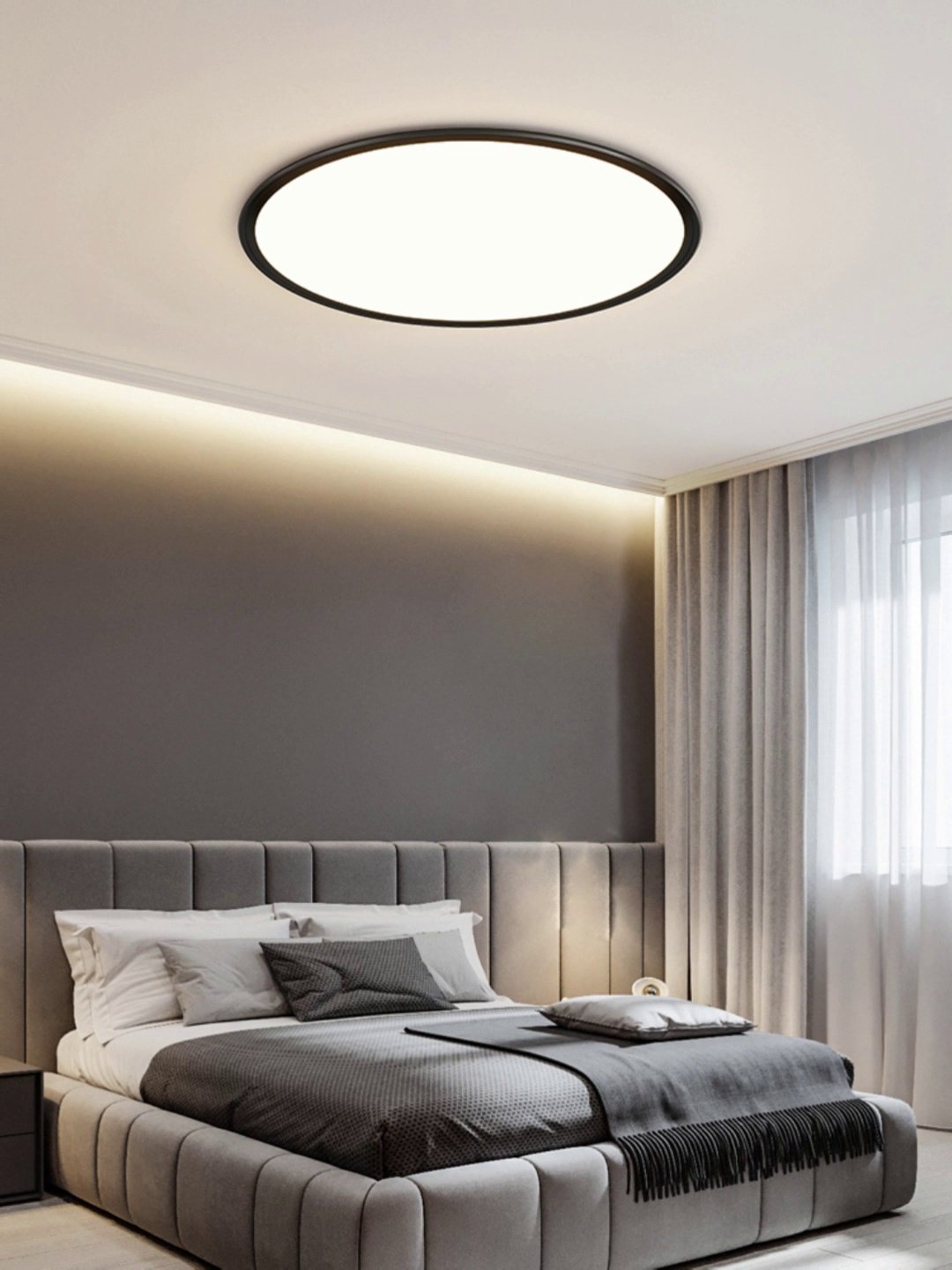
 For round ceiling lights in bedrooms, the diameter should be at least 40cm; for areas over 15 square meters, at least 50cm; and for areas over 20 square meters, at least 60cm.
3. Material Selection
The best material for the frame and base is aluminum, followed by iron (except for kitchens and bathrooms). Avoid plastic, as it has poor heat dissipation and is cheap.The lampshade material directly affects the lighting effect and the light fixture's lifespan.Acrylic lampshades are recommended because they provide more even, soft light transmission (over 90% light transmittance). Acrylic is also more corrosion-resistant and less prone to yellowing. Avoid PVC.
4. Sealed Design
The lampshade should be sealed to prevent dust, insects, and moisture from entering.
5. Power Selection
In short: Living room: 4-5W/㎡, Bedroom: 2-3W/㎡, Dining room & Kitchen: 5-6W/㎡.
6. No Blue Light Harm and flicker-free
Most quality LED ceiling lights can achieve this.
Function Selection to Enhance User Experience
1. Color Rendering Index (CRI)
The CRI reflects how closely the colors resemble sunlight. It should be at least 80%, and ideally above 90%.For dining rooms and kitchens, a CRI of 95% or higher is recommended. The higher the CRI, the more vibrant the food colors appear, making them more appetizing.
2. Full-Spectrum Light Source
Sunlight is a trustworthy, full-spectrum light source and the healthiest.Artificial light sources should have a spectrum as close as possible to the visible spectrum of sunlight (i.e., "sunlight-like") to be considered healthy lighting.Full-spectrum lighting products combine high luminous Efficacy, high color rendering index (CRI), low blue light, high color saturation and fidelity, and good spectral continuity.Full-spectrum lighting excited by violet light is better than that excited by blue light, but it is also more expensive.The CRI of a full-spectrum light source must be greater than 95%.Eye-protection lamps must be full-spectrum, preferably violet. Full-spectrum light sources are recommended for studies and children's rooms.
3. Light Emission Method
Light-emission methods are classified as top-emitting or side-emitting (with a light guide plate).Top-emitting LEDs are located at the top, shining downwards, and the light source is easy to replace.Side-emitting LEDs (with light guide plates) are mounted on the side, using reflective paper, light guide plates, etc., resulting in soft, uniform light.
4. Three CCT Color Temperatures
Controlled by a switch or remote, it allows switching between warm white, neutral white, and cold white color temperatures.If you don't choose a bright light, there's no need to adjust the color temperature.
5. Smart Ceiling Light
It can connect to your phone and smart speaker, offering stepless adjustment of brightness and color temperature.If you have a smart home system, a bright ceiling light is recommended.
Conclusion
A well-chosen ceiling light can create a clean, bright home environment and is affordable. However, its light is often diffuse and lacks depth; it's best used alongside wall lamps, floor lamps, LED strips, track lighting, or other supplementary lighting.
Previous
How to Install the LED Magnetic Track System: A Step-by-Step Guide
Read More
Next
3 phase 4 Wires Track Lighting Rail and Accessories
Read More